
- New arrival
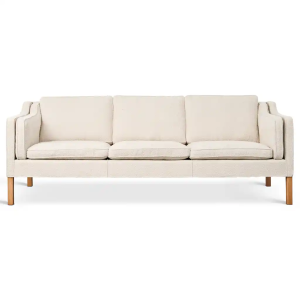
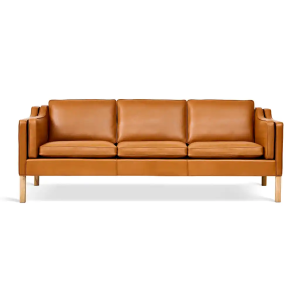
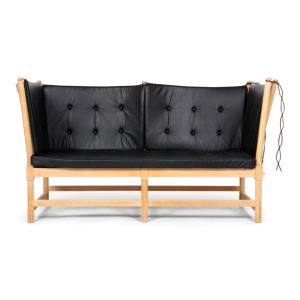
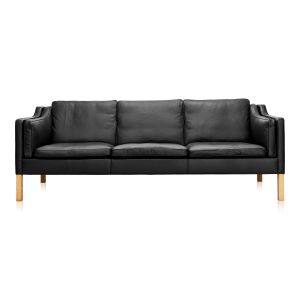
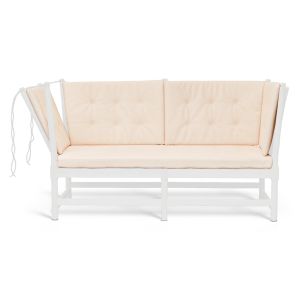
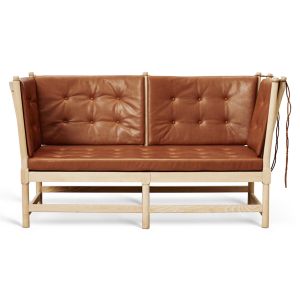
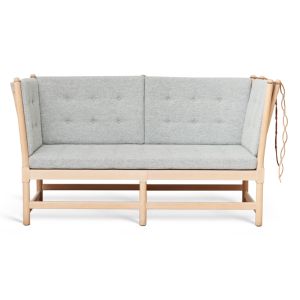
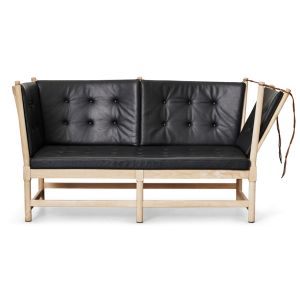
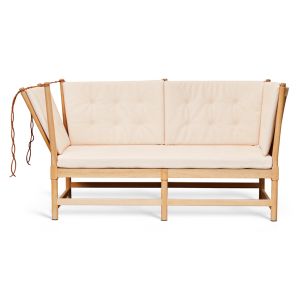

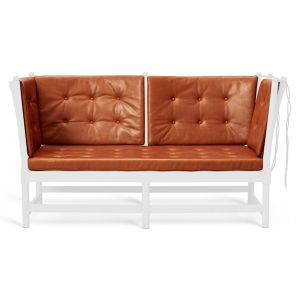
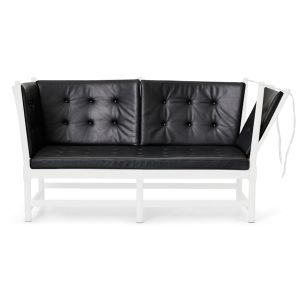
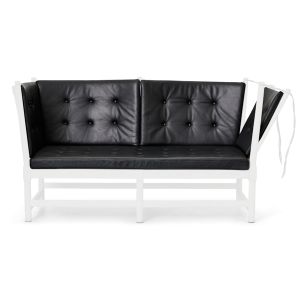
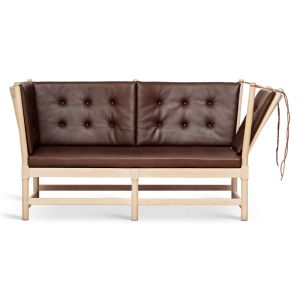
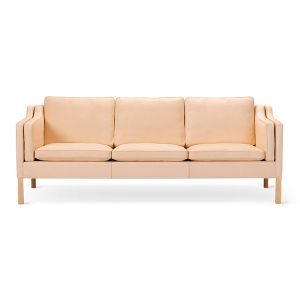
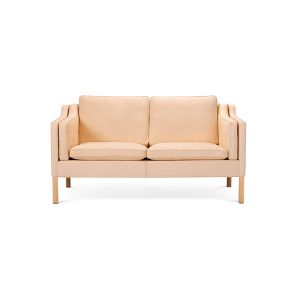
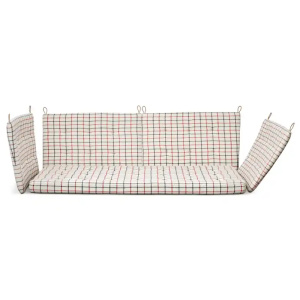
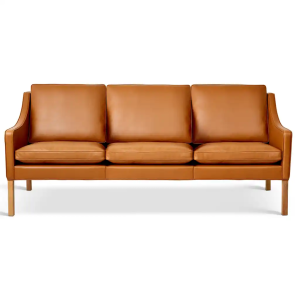
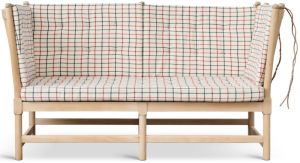
Discover the Spoke-back Sofa by Børge Mogensen
From 1942-1950, Børge Mogensen headed FDB Møbler, where many of his most iconic works were conceived. FDB made affordable furniture for ordinary Danish homes: pieces designed for daily use and made to last. The Spoke-back Sofa was created in this spirit, as a daybed or chaise longue for everyday life.
The distinctive sofa first appeared in 1945 and is perhaps one of Mogensen’s most iconic pieces. The world was not quite ready for it, however, and it did not enter production immediately. Almost 20 years passed before Fredericia Furniture launched the unique sofa, now with the characteristic textile Mogensen created in collaboration with Lis Ahlmann.
The 2200 series was created with Kaare Klint as its point of departure
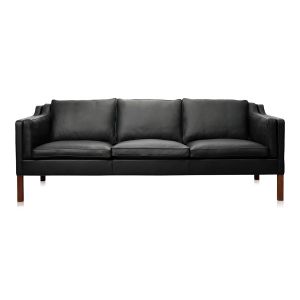
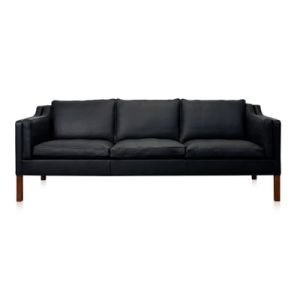
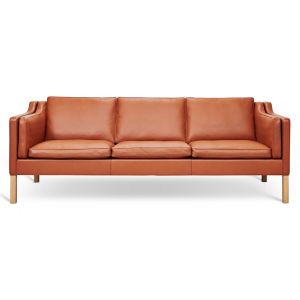
As the Spoke-back Sofa gained recognition, Mogensen moved on to his next project. He set out to create the world’s finest sofa, beginning the 2200 series. Its first design, the 2213, was created for his own home in Gentofte and took inspiration from sofas designed decades earlier by his mentor, Kaare Klint, giving rise to a series of enduring classics.
The 2200 series includes both 2- and 3-seater sofas, including versions in black leather, as well as a pair of armchairs. Among them is the celebrated Wing Chair, another of Mogensen’s best-known and most sought-after designs. Overall, the 2200 series, including its leather sofas, contains some of his most comfortable furniture.
2332 and 2333: Børge Mogensen sofas that defy expectations
The sofas in the 2300 series reveal a different side of the master cabinetmaker. Børge Mogensen was never known for lavish detail or ornament, but the 2300 series was exceptionally minimalist even by his standards. Strong lines and a distinctly geometric character define the collection, creating an almost poetic contrast with the Shaker furniture of his early career.
It is difficult to travel further from a curved wooden chair than a square, generously upholstered sofa. The 2333 sofa was the final sofa the great designer created before his untimely death from a brain tumour.
Who was the man behind Børge Mogensen’s sofas?
Børge Mogensen (1914-1972) was unquestionably one of the greatest designers of the 20th century. In many ways, among the golden generation of furniture designers, including both Arne Jacobsen and Hans J. Wegner – he had the greatest influence on his contemporaries.
While Jacobsen and Wegner drew international attention, Børge Mogensen designed furniture for the Danish people. His approach to form, function and materials was uncompromising, and Danish households embraced his work wholeheartedly.
Børge Mogensen was extraordinarily productive throughout his career, creating countless enduring furniture classics. He drove himself hard, and his life was marked by exacting perfectionism and excessive drinking, factors that may have contributed to the fact that Denmark’s master furniture maker lived to only 58.
Trained at the School of Arts and Crafts and the Royal Danish Academy
Børge Mogensen qualified as a cabinetmaker in 1934 before studying furniture architecture. He attended the School of Arts and Crafts and later the Royal Danish Academy, where he studied under Kaare Klint. This mentorship profoundly shaped Mogensen’s life and career.
Kaare Klint is regarded as the father of Danish modernism. He advocated a rigorous focus on furniture’s function and the people who would use it, principles the young Børge Mogensen embraced wholeheartedly. Mogensen also met the young Hans J. Wegner at the Academy, and the two remained lifelong friends.
Furniture maker rather than designer
Børge Mogensen’s training as a cabinetmaker, as well as a furniture architect, profoundly influenced his approach. Although he fully mastered the creative architectural discipline, it was perhaps his grounding in cabinetmaking that drove him most. He therefore insisted on calling himself a furniture maker rather than a designer.
Børge Mogensen sofas are founded on function
Mogensen was almost fanatical about function, which remained his ideological driving force throughout his career. He consistently championed the tenets of functionalism and was quick to criticise colleagues who departed from its strict doctrine. The more artistic direction of furniture in the 1960s often drew his accusations of surrendering to form and projecting false prosperity.
He was equally exacting and uncompromising about quality and materials. Natural materials were preferred, although metal could occasionally be used, and ideally the timber would be Danish. Despite his cabinetmaking background, he was pragmatic about production methods because keeping prices accessible mattered. Above all, Børge Mogensen created furniture for the people.
Explore ReCollection
If you would like to discover more furniture by this iconic designer, do not miss Børge Mogensen’s armchairs. Be warned: they are easy to fall in love with.
If you are interested in other designers or other designer furniture, you will find that too. ReCollection offers sofas, chairs and tables in a range of styles, helping you find designer furniture that feels at home in your interior.