- New arrival
- New arrival
- New arrival
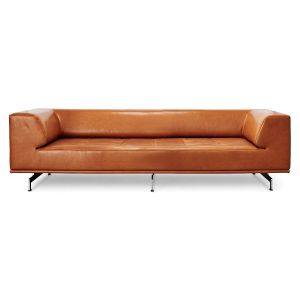
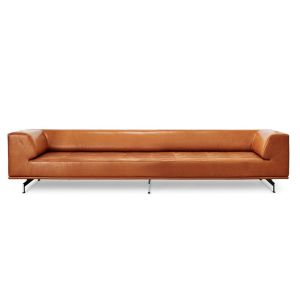
ERIK JØRGENSEN
Within the Danish design tradition, the name Erik Jørgensen actually refers to two people: Erik Ole Jørgensen, a designer and furniture upholsterer, and Erik Jørgensen, a designer and manufacturer. Adding to the potential confusion, the two men also worked together, notably on the iconic EJ315 sofa, which earned its place among Denmark’s great design classics.
THE TWO DESIGNERS NAMED ERIK JØRGENSEN
Erik Jørgensen may be a somewhat overlooked name in the Danish furniture tradition, but it should not be – especially when two people bearing that name each made a significant mark on the industry.
Erik Ole Jørgensen was a Danish designer, while Erik Jørgensen was both designer and manufacturer. Both created sofas that were produced by Erik Jørgensen’s company, making the shared name still more difficult to navigate. They were, however, two distinct individuals whose long and influential careers frequently intersected.
ABOUT ERIK OLE JØRGENSEN
Erik Ole Jørgensen (1925-2002) is a somewhat overlooked figure among Denmark’s great designers, and in many respects differed from his golden-age contemporaries. A remarkable polymath, his ideas and lines left an unmistakable imprint on furniture, textiles and even architecture.
Erik Ole Jørgensen came from a family of accomplished craftspeople; his grandfather carved the iconic chairs in the Danish Parliament’s debating chamber. His father was an upholsterer, and the son followed the same path, qualifying in 1944. A lengthy hospital stay with polio would send the young upholsterer in a different direction.
While confined to bed, the young Jørgensen developed a passion for watercolour. The ideas and skills he acquired during his illness became the driving force behind a new career. Form and colour would define his future, and he entered the cabinetmaking programme at the School of Arts and Crafts, where Børge Mogensen and Hans J. Wegner became important influences. He also frequently attended Kaare Klint’s lectures at the Royal Danish Academy.
THE CELEBRATED ERIK OLE JØRGENSEN SOFA
A few years after graduating, he took over his father’s upholstery business, which increasingly began producing the younger Jørgensen’s furniture. He became known for handsome, solidly made chairs, but it was not until the 1970s that Erik Ole truly secured his place in Danish design history.
For FDB, he created a series of spoke-back sofas that became immensely popular in Danish homes, while also beginning his long collaboration with textile company Kvadrat. His textile work included designs for the German Reichstag. His best-known furniture, however, emerged in collaboration with the other Erik Jørgensen.
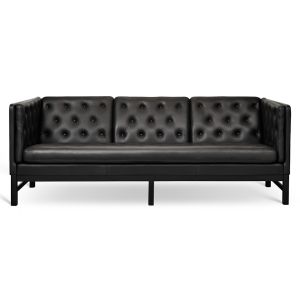
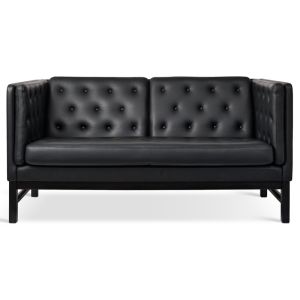
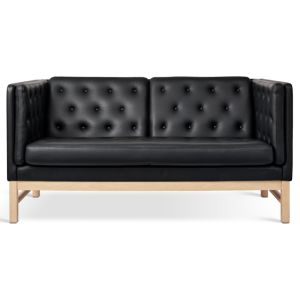
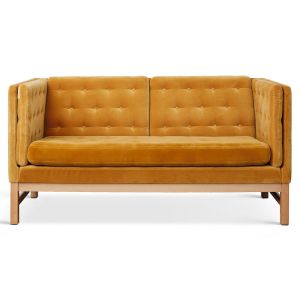
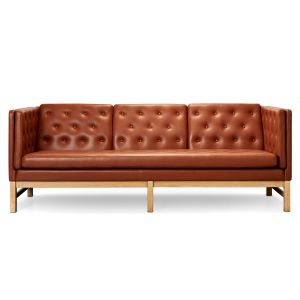
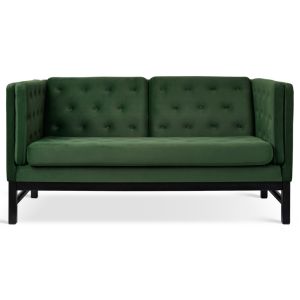
Together they produced the EJ 315 series of sofas and chairs. The sofa is at once minimalist and modern, while its many hand-sewn buttons evoke the opulent interiors of an earlier age. Celebrated for its comfort, beauty and uncompromising quality, the EJ 315 quickly became a great classic of Danish design.
Erik Ole Jørgensen continued his tireless exploration of form and colour, leaving his mark on a wealth of furniture, textile and architectural projects over his long career.
ABOUT ERIK JØRGENSEN
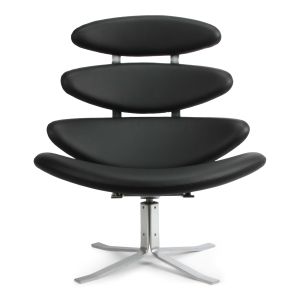
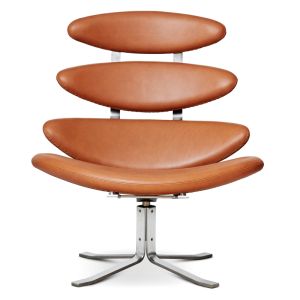
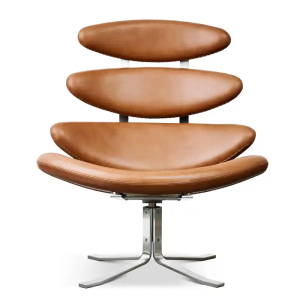
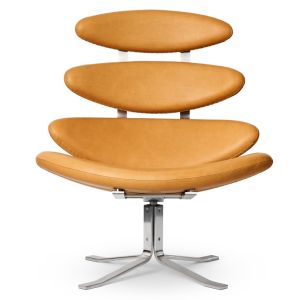
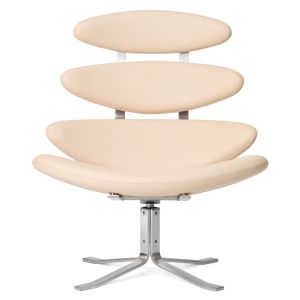
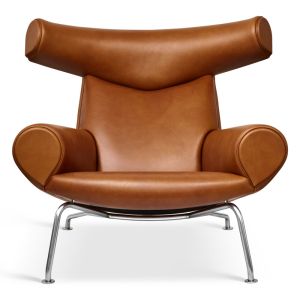
Erik Jørgensen (1928-1998) began his career as a saddler and upholsterer. Inspired by the developments transforming Danish furniture, he opened his own factory in Svendborg in 1954. He quickly became known and respected for producing furniture of exceptional quality, and several major classics were made there, including Hans J. Wegner’s Ox Chair, Poul Volther’s Corona Chair and Erik Ole Jørgensen’s celebrated EJ 315 sofa.
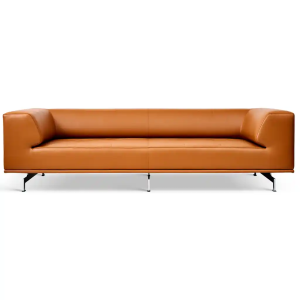
Producing furniture for the finest designers of his day was not enough for the Funen manufacturer, whose creative drive led him to design a sofa of his own. Introduced in 1970, the EJ 220 was an immediate success and may be one of the most popular sofas ever created in Denmark, for several very good reasons.
Above all, Erik Jørgensen’s EJ 220 combines the exceptional comfort of a generously proportioned sofa with the restrained simplicity at the heart of Danish modernism.
AN ERIK JØRGENSEN SOFA IS A CLASSIC
Erik Jørgensen’s EJ 220 has become a Danish furniture classic almost equal to the masterpieces he produced for other designers. Its simple design has allowed the sofa to sit naturally within the interiors of successive generations, and almost five decades later it still feels entirely relevant.
The Svendborg factory became an institution in Danish furniture, and the Erik Jørgensen name is now synonymous with exceptional quality in Denmark and abroad. The company remains in family hands, and since Erik Jørgensen’s death, designs by Poul Volther, Hans J. Wegner and Hannes Wettstein have been joined by work from a new generation of young talents entrusted with carrying this considerable legacy forward.
At ReCollection you can discover sofas by both Erik Jørgensen and Erik Ole Jørgensen. We offer sofas, chairs, lounge chairs, tables and other finely crafted pieces by many of Denmark’s greatest and most popular designers. If instead you wish to sell an Ox Chair, Corona Chair or perhaps an Erik Jørgensen sofa, we also buy designer furniture. Learn more here.